Founder · 2023 to present
Glend
Spain's gluten-free marketplace, providing people with celiac disease the quality products they deserve.
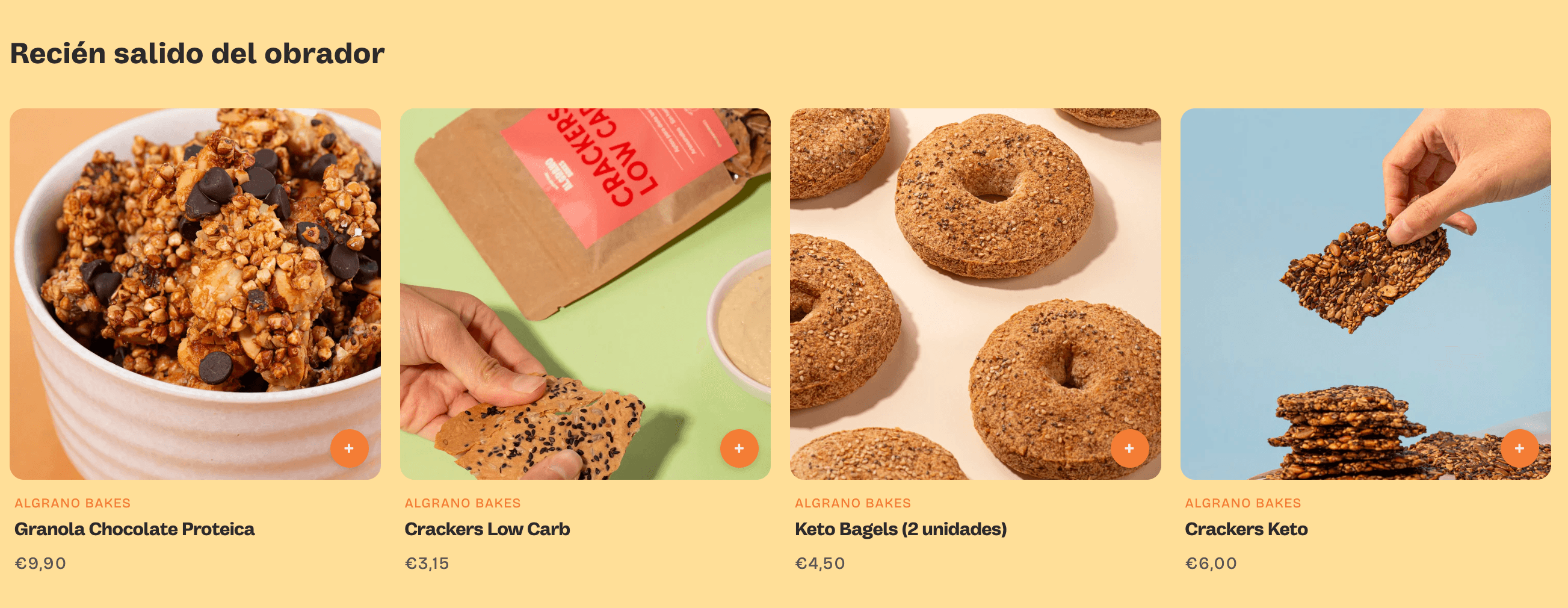
What it does — Glend is a Shopify-based gluten-free marketplace in Spain. Direct-from-supplier products plus fresh items sold on commission. Operated end-to-end by a single founder using AI agents for sourcing, cataloging, and content.
The problem
The problem
Spain has a thriving gluten-free baking and food-production scene (small bakeries, regional producers, family operations) and almost none of it is discoverable online. A celiac in Madrid can't easily find what an artisan in Galicia is making. The producers don't run e-commerce. The customers don't know they exist.
Bridging that gap manually means: scout dozens of bakeries every month across a country the size of Spain, extract product information from sites that range from "lovely" to "Word document on a hosting plan from 2009," translate it into clean Shopify product pages with consistent voice, and keep the whole thing fresh as suppliers add and drop products. As one person, with two other companies running, that's not realistic.
So either Glend doesn't exist, or it runs on AI agents.
My approach
Same architectural pattern as Preferr (small, scoped agents, each owning one operational job), applied to a completely different industry. The repeatability of the pattern is the point.
Four agents in production
- 01
Bakery scout agent
Discovers gluten-free bakeries and producers across Spanish provinces, qualifies them against Glend's quality bar, and queues them for outreach.
- 02
Product cataloger agent
Scrapes product information from supplier websites and structures it (name, ingredients, allergens, weight, pricing) for the Shopify catalog.
- 03
Product content agent
Converts raw structured data into Shopify-ready product listings (titles, descriptions, SEO meta) written in Glend's voice, in Spanish.
- 04
Tone-of-voice agent
Single source of truth for how Glend sounds across product pages, social, and email.
Discover → qualify → catalog → publish. Same loop as Preferr. Different goods at the end of it.
Key AI decisions
Key AI decisions
Translate, don't generate.
Product copy is generated from real supplier data, not from a model's imagination. Hallucinated allergen claims aren't a brand risk for a coffee app. For a celiac marketplace they're a legal and ethical disaster. Every product description is anchored to verified ingredient data. The model handles voice and structure, not facts.
Two-stage cataloging.
The cataloger agent extracts. A human (me) reviews. Only then does the content agent generate the customer-facing listing. This adds a step and removes a category of bug that would otherwise sink the brand.
Spanish-first, not translated-from-English.
Glend's voice was developed in Spanish from the start, not translated. The tone-of-voice agent's prompts are in Spanish. The output reads like it was written by someone who actually lives here, because it was scoped that way from day one.
Reuse over reinvent.
Most of the agent architecture was lifted directly from Preferr's pattern. Different prompts, same skeleton. The fact that the same operating model worked for both businesses, in completely different industries, is the strongest evidence I have that it's not a one-off.
Outcomes
Suppliers onboarded without a team.
Producers onboarded across multiple Spanish provinces with no full-time supplier-ops headcount. New products staged and published in a few hours of human review per week.
Voice consistency at scale.
Every product page reads like it came from the same brand, even when the underlying suppliers don't have one. Most agent-generated listings pass review on the first draft.
Cost-per-output below headcount.
All four agents run for roughly the cost of a single freelance afternoon per month. Equivalent work in headcount would have been a full-time role.
Architecture validated across industries.
Same agent stack as Preferr (different industry, different language, different goods), proving the underlying pattern is the asset, not the specific code.
Capacity freed for new product work.
Mobile companion app in development, only possible because operations don't require my attention.
What I'd do differently
What I'd do differently
Validate the supplier-onboarding bottleneck earlier.
Discovering bakeries was easy. Getting them to actually agree to commission terms and ship orders is the real bottleneck, and no agent solves a relationship problem. I'd start the in-person supplier-onboarding work in parallel with the discovery agent on day one, not after the catalog was built.
Treat the Shopify side as a product, not as a backend.
I optimised the agent stack first and the customer-facing storefront second. Real conversion lives on the storefront. Same calories of work into theme design and PDP UX would have moved revenue more than another agent.
Pre-write the product-content style guide.
The tone-of-voice agent worked well, but I built it iteratively over weeks from corrected outputs. A two-hour up-front session writing the style guide explicitly (voice, banned words, sentence-length targets, examples) would have collapsed that into a single afternoon.
The pattern, in your business.
The architecture that runs Preferr also runs Glend. Different industry, different language, same pattern. If your business has operational work that needs to happen at a scale your team can't sustain, the pattern probably transfers there too.
If this kind of work could run inside your business, that's the conversation to have.
Glend is one of the patterns I bring into client work. The first 30 minutes are free, no slides.